
At the beginning of this year, I made a decision to work out at home. Nothing fancy, just follow a walk-at-home video every Monday, Wednesday and on Friday’s I would walk 7 laps around a football field. It wasn’t a New Year’s resolution, I had been doing quarterly reviews and it just so happened that February was the beginning of another quarter with a new level of personal care. February felt awesome, March was good, then the short rains came and in came the flu that made getting out bed seem like climbing a mountain.
Then, the walk-at-home videos stopped showing on my feed and I went right back – no work out, base-less fatigue, a sense of heaviness, rapid breathing from a set of less that 15 stairs. I didn’t look for them, either. Within weeks I was exactly where I had promised myself I would not go back to.
What I remember most isn’t the relapse itself. It’s the self-condemnation. It was easier to scoop up assignments with longer deep work. I didn’t even want to hear the suggestion because starting again was just too much work.
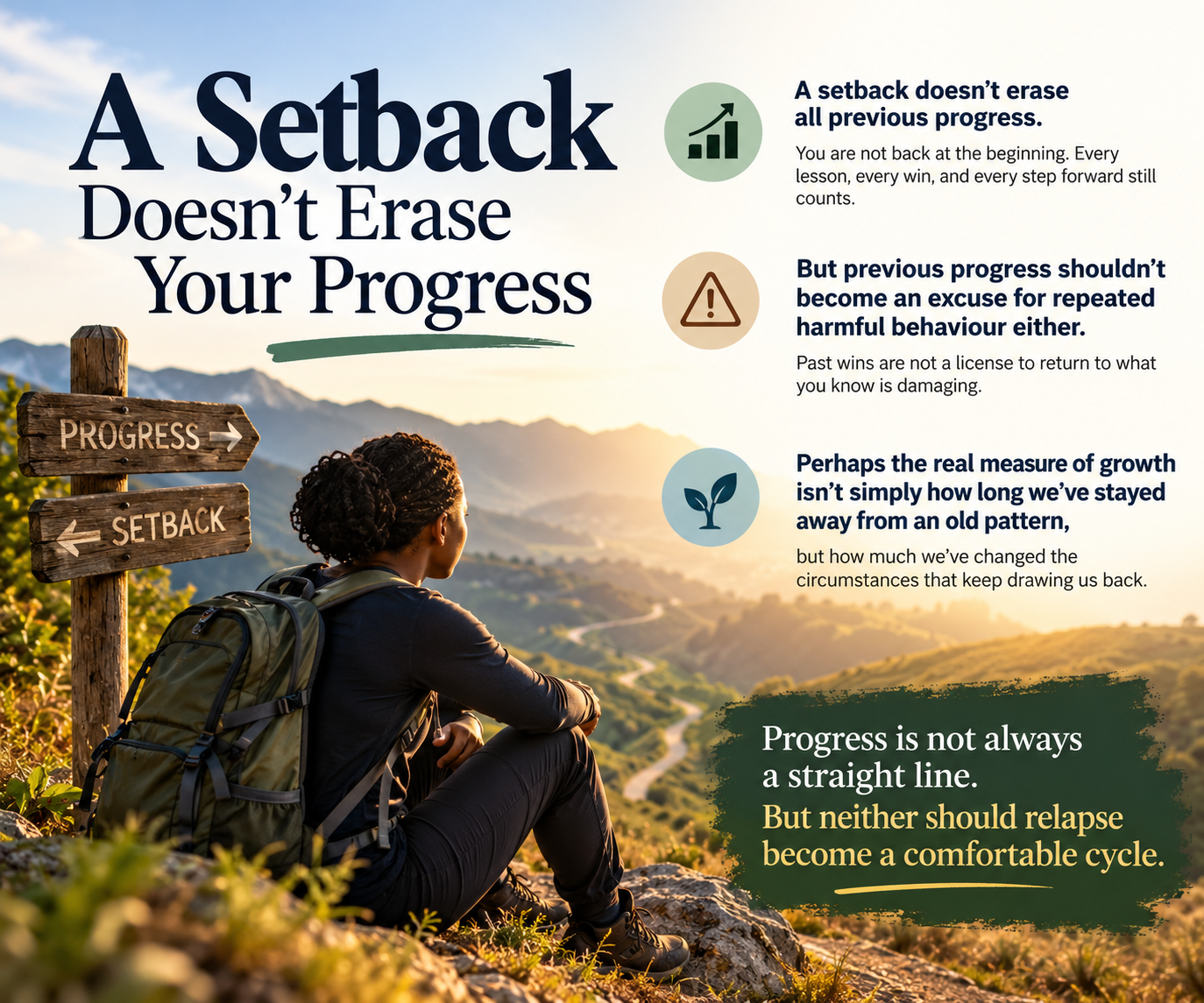
I wish someone had told me then that relapse is not the opposite of progress. It’s a part of it.
Relapse isn’t just about addiction
We tend to attach the word to substances, but the pattern shows up everywhere. The person who returns to a toxic relationship they swore was done. The founder who fixed their finances and quietly slid back into chaotic spending. The leader who rebuilt their calendar and is now buried in back-to-back meetings again.
Different habits, same mechanism. When we’re stressed, lonely, or exhausted, the brain reaches for what’s familiar, even when familiar has hurt us.
The part we don’t discuss: it ripples
When I fell back, I thought I was the only one affected. I was wrong.
My accountability partner (my daughter) had to decide whether to hope again. My spouse endured the silence he had not contributed to. My friends, who had said “I’m proud of you,” didn’t know what to say now. And I carried the heaviest weight of all: the belief that I had failed for good.
That belief is the real danger. Shame and self-admonition/ condemnation turns a slip into a slide, because if you’ve already failed, why not keep going?
What helped me, and what the research supports
- Name it early. A slip you admit to is information. A slip you hide becomes a pattern.
- Replace “what’s wrong with me?” with “what happened right before?” Triggers are usually predictable: stress, isolation, fatigue, a particular person or place.
- Build systems, not just resolve. Willpower runs out. Automatic transfers, protected calendar time, written boundaries, and an accountability partner don’t.
- Be honest with the people affected. Skip the grand confession. Trust is rebuilt through consistent behavior over time, not one apology.
- Focus on the next right action. Not the whole plan. Just the next step
A note for leaders and teams
Relapse is rarely discussed in professional settings, yet it affects performance, relationships, and culture. Organizations that treat setbacks as a normal part of behavior change, rather than a failing to be punished, tend to retain people who are willing to be honest early. Psychological safety isn’t a slogan. It’s the difference between someone saying “I’m struggling” and someone quietly disappearing.
Closing thought
Lasting change is rarely a straight line. It’s a practice, often with setbacks, and the people who succeed are the ones who stop treating a fall as a verdict.
If you’re in the middle of a relapse right now, you are not starting from zero. You are starting from experience.
I’d welcome your perspective: what has helped you or your teams navigate a setback? Please share in the comments.

No responses yet